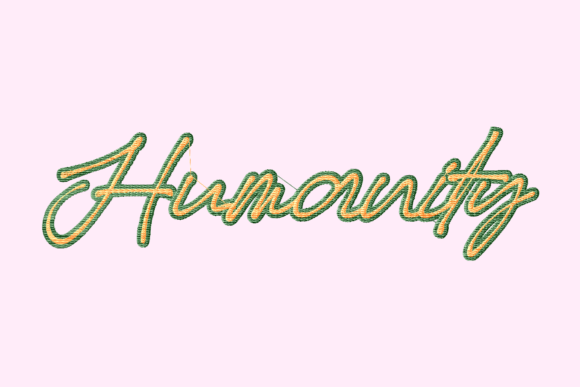
Humanity Lettering: A Welcoming Design for Your Craft Booth
When preparing products for a weekend craft fair or handmade market, every embroidery design in your lineup needs to earn its place. It must sell from a table display, connect with customers walking by, and be practical to produce in batches. Let’s review the Humanity Lettering embroidery design from that exact perspective.
First Impression: Warm, Adorable, and Universally Welcoming
The name Humanity Lettering and its description as an “adorable, welcoming accent” immediately set a tone. This isn’t a bold, stark, or minimalist statement. It feels soft, approachable, and inherently kind. The mood leans toward what many customers seek in a handmade product: a sense of warmth, connection, and positive sentiment. In a crowded craft fair booth, designs that evoke emotion and warmth often stand out against more generic patterns. This design sits comfortably in the Family Quotes category, but its appeal is broader; it’s about a welcoming home and spirit, not just a family unit.
Where Humanity Lettering Will Stand Out on Your Table
Your display likely includes embroidered tote bags, aprons, tea towels, patches, caps, and small pouches. For Humanity Lettering, focus on products where a welcoming, decorative accent makes logical sense.
- Tote Bags & Market Bags: This is a prime candidate. A tote is a visible, everyday item. Stitched on the front or side panel, the lettering becomes a gentle, personality-filled detail that elevates a simple bag into a giftable handmade item.
- Aprons & Kitchen Towels: Given its welcoming nature, aprons and tea towels are perfect fits, especially for a farmhouse or cozy kitchen aesthetic. It transforms a utilitarian item into something special for the home.
- Pillow Covers: A small, accent pillow with this design could be incredibly effective. It’s decorative without being overpowering, adding a soft touch to a living space.
- Small Pouches & Giftable Items: On a zipper pouch or a small fabric bag, the design becomes a charming detail that suggests care and craftsmanship, increasing the perceived value.
- Embroidered Patches: As a patch, Humanity Lettering offers versatility. Customers might buy it to apply to their own items, adding a personalized, welcoming touch to a jacket, backpack, or cap.
I would advise against using it as a primary focal point on curved surfaces like caps, unless the embroidery file is specifically adapted and tested for that format. The welcoming, textual nature might lose clarity on a small, curved area.
Practical Production & Selling Points
From an embroidery designer and business owner’s point of view, a design must be producible and sellable.
Understanding at a Glance
The message of Humanity Lettering is clear: it’s about a positive, human connection. This is a significant advantage at a craft fair. Customers browsing quickly can understand the sentiment without explanation, which aids in spontaneous purchases. It works beautifully as a medium-sized accent design, not so large it dominates the entire product, but not so small it becomes an indistinct detail.
Photography and Online Listings
For your Etsy listings or online shop, this design should photograph well. The words are likely the central element, so crisp stitching with good thread contrast against the fabric is vital. A printable mockup can help visualize it, but for a true assessment of handmade quality, you must create at least one real physical sample. Photograph it in a natural, welcoming setting—perhaps on a towel draped over a kitchen rack or a tote bag with some market produce—to reinforce its intended use.
Batch Production Considerations
Is it repeatable for batch production? This depends heavily on the specifics of the digital embroidery file. Before committing to a batch of fifty tote bags, you must test the design on scrap fabric of the exact type you’ll use. Check for potential issues:
- Stitch Density: Dense stitch areas in lettering can make some fabrics, like lightweight canvas for bags, pull or pucker. The right stabilizer is non-negotiable.
- Small Lettering Details: If any letters have tiny, intricate sections, they may fill in or lose clarity on textured fabrics like terry cloth towels.
- Thread Colors: A simple, effective color palette will speed production. Complex color changes can slow down batch embroidery.
- Hoop Size & Design Size: The description doesn’t specify a hoop size, so you must check the included file information. Ensure the design fits efficiently on your standard hoop sizes for your chosen products to minimize repositioning and waste.
Always confirm commercial licensing before selling finished products. The description mentions it’s a “machine embroidery design,” but the license terms for commercial use are a separate, critical detail.
The Impact on Your Booth and Brand
Incorporating Humanity Lettering into your product range affects more than just a single item sale.
It boosts customer attention by offering a heartfelt, non-trendy sentiment that feels genuine. In a booth, grouping several products featuring this design—a towel, a pouch, and a tote—creates a cohesive mini-collection that tells a story about your brand’s style: welcoming, thoughtful, and skillfully made.
It enhances product value. A plain tea towel is a commodity. An embroidered tea towel with a beautiful, well-executed sentiment like this is a small shop product with handmade premium appeal.
Finally, it encourages buyer engagement. Customers often comment on and touch embroidered text. They read it. That moment of reading “Humanity Lettering” creates a personal connection, a pause in their browsing, which is exactly what you want at a busy market.
Final Designer Notes Before You Stitch
My professional advice is to treat this machine embroidery design with careful preparation. Don’t assume it will run perfectly on every material.
- Run a test on every fabric texture you plan to use: smooth cotton for bags, textured linen for towels, possibly thicker fabric for aprons.
- Compare fabric colors. This design likely needs a strong contrast. Test on both light and dark fabric to see if stitch clarity holds.
- Inspect the stitched sample closely. Are any small loops or letter connections unclear? Does the design feel balanced on the product?
- Review the spacing and overall layout. Does it sit well on your chosen product’s available embroidery area?
Humanity Lettering has the core emotional appeal and versatile product application that can make it a steady seller at craft fairs and in your Etsy shop. Its success, however, hinges entirely on your execution. A poorly stitched sample on unsuitable fabric will undermine its welcoming charm. A crisp, perfectly placed embroidery on a well-chosen item will make it a highlight of your craft fair product display and a meaningful addition to a customer’s home.